A bag quote is not one number. It is material, labour, hardware, lining, packaging, setup and quantity interacting — and knowing which of those actually moves the number is the difference between negotiating well and negotiating blindly.
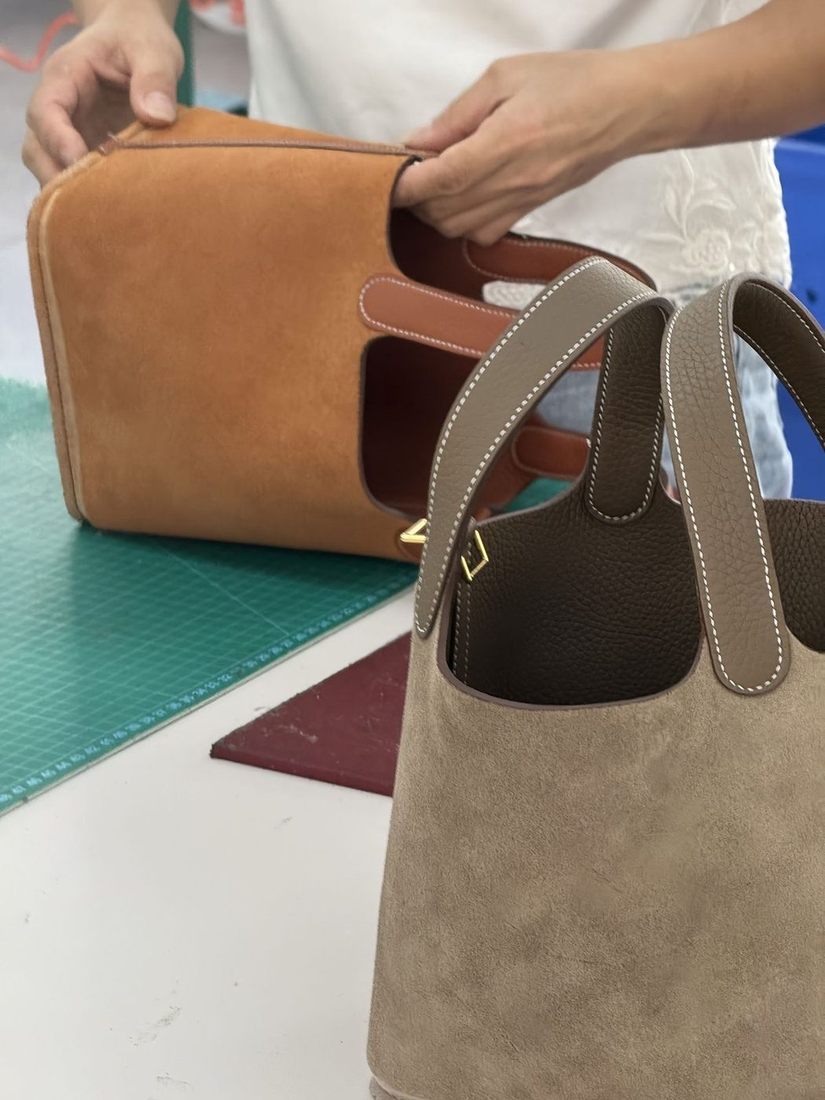
Material is usually the largest line, and it has two dials, not one. The first is grade — the difference between a full-grain hide and a corrected one. The second, which buyers notice less, is consumption: how much of the sheet each bag eats.
A large tote can consume twice the leather of a small crossbody even in the same hide. And because leather is a natural material, the usable area varies from hide to hide — a scarred region gets cut around, and that waste is priced somewhere. PU behaves differently: it arrives in a roll, cuts predictably, and wastes little. If you are weighing the two, we covered the rest of that trade-off in genuine leather vs PU.
Two bags with identical materials can differ sharply in labour. What drives it is not the size of the bag but the number of operations: panel count, edge length to paint, whether handles are hand-rolled, whether the lining is fitted or bagged, how many hardware attachments there are.
This is why “same bag, different material, what’s the price?” rarely produces the answer people expect. Labour does not change with the material. A complex little crossbody can cost more to assemble than a plain large tote.
Hardware looks like a detail line until you price it properly: a zipper with smooth pulls, custom-engraved clasps, feet, D-rings, rivets — each one sourced, checked and attached. Custom hardware also carries tooling, which is a setup cost paid once and amortised over the run.
Edge finishing is the quiet one. Painted, folded or raw edges differ in labour and in how the bag ages — the trade-off is explained in what to check on a sample. Neither is “better”; they are different spend.
| Cost type | Paid | Scales with quantity? |
|---|---|---|
| Pattern making | Once, per new shape | No |
| Sample rounds | Once, per development | No |
| Die cutting / hardware tooling | Once, per run | Amortised |
| Colour matching | Once, per colour | Per colour, not per piece |
| Material + labour + finishing | Every piece | Yes, linear |
That table is why the price per piece drops with quantity — and why the drop flattens. Doubling the quantity does not halve the price, because the material-and-labour line stays linear. It is also why three colours are three minimums: colour matching and cutting happen per colour, not per shape. The full mechanics are in our guide to minimums.
A price that ignores setup is not cheaper. It is quoting less of the job — and the job still gets paid for, just later, and worse.
Three levers genuinely work:
What does not work is asking for the same specification at a lower number. Something in the spec always pays for it — the leather, the hardware, the stitching density, or the corner that is quietly cut.
A comparable quote states the material and grade, the hardware spec, the lining, the packaging, the incoterms and the quantity. If a quote arrives without those, ask what it assumes — the assumptions are where the real difference between two quotes hides.
What is the biggest cost driver in a leather bag? Material — and within material, panel size and cutting yield matter as much as grade. Hardware and edge finishing come next.
Why does the price per piece drop with quantity? Setup work is paid once per run and spreads across more pieces, and larger runs cut and sew in longer batches. The drop is real but flattens; doubling quantity never halves the price.
Is it cheaper to make a bag from stock designs? Yes — development is already paid for, so the unit carries only material, labour and finishing. Stock starts at 50 pieces; custom runs from 200 per colour.
Does switching to PU halve the cost? No — only the material line drops. Labour, lining, hardware and packaging are unchanged.
What hidden costs should I budget for? Hardware tooling, colour matching, sample rounds, freight and duties, and working capital between deposit and delivery.
How can I lower the unit price without cutting quality? Start from a shape already in production, trim colours rather than quantity, and concentrate the first run. Never just ask for the same spec cheaper — something in the spec pays for it.
Want to see these levers applied to your actual style? Send the design, the quantity and the colour plan — we will come back with a costed quote that shows the assumptions, or browse 150 designs developed for 300+ brands.
Send the style, the quantity and the colour plan — we come back with materials, a costed quote and a sampling plan, usually within 24 hours. Buying for a shop rather than for a brand? See stock & trade orders.
Start your inquiry